
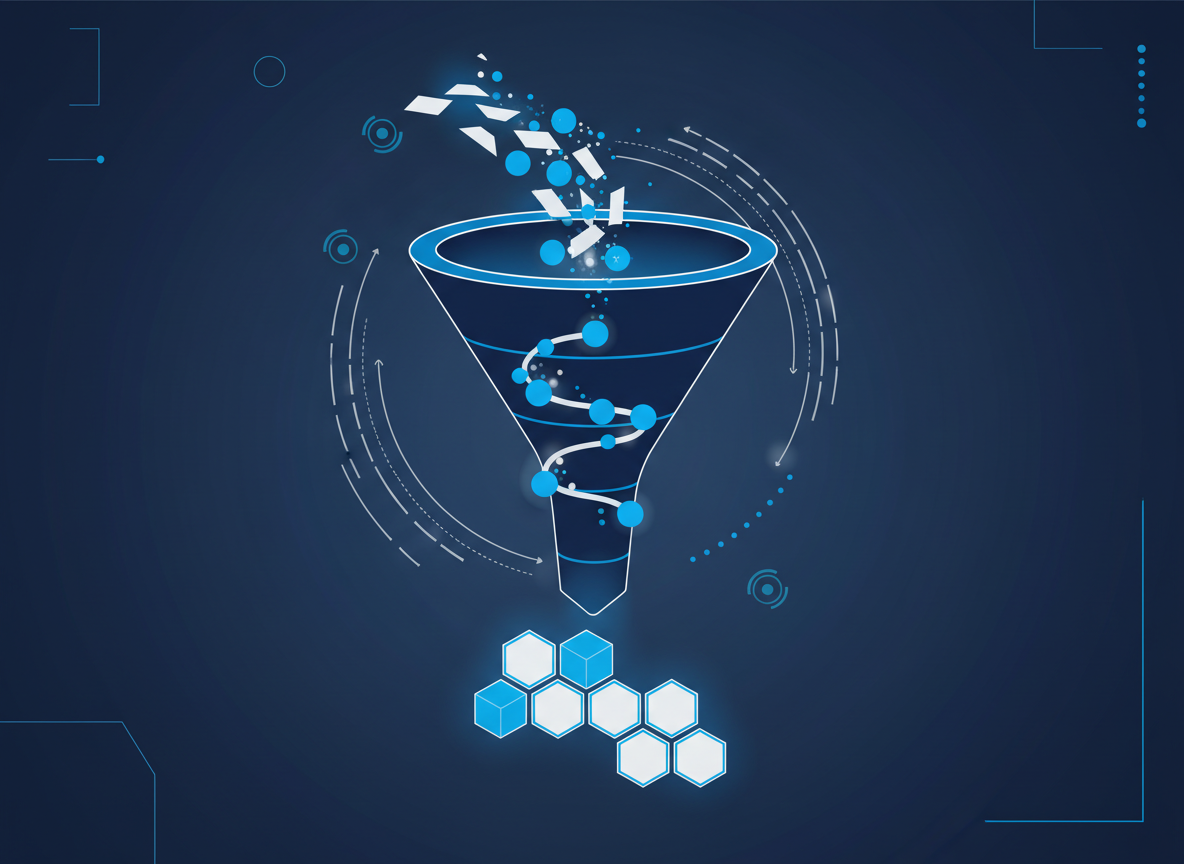
A campaign can generate more leads and still fail to create more customers. That usually happens because the number of form submissions is only one step in the journey. Lead quality, landing-page friction, follow-up and measurement all affect whether a lead becomes a real business outcome.

A lead is not the finish line
Google Analytics describes a lead as someone who shows interest in a product or service, such as a visitor who submits a form. That is useful, but it is still an intermediate action. For most service businesses, the commercial journey continues through qualification, contact, consultation, appointment and eventually a sale.
1. Measure the funnel, not just the form submission
Start by measuring the stages around the form: how many people reached the landing page, how many reached the form, how many submitted it and what happened afterwards. Google Analytics recommends measuring these steps because drop-off can happen at several points. A low form-view rate can point to weak page structure or a poor call to action. A good submission rate with weak sales can point to lead quality or follow-up instead.
2. Separate lead volume from lead quality
Ten enquiries from people who are a strong fit can be more valuable than fifty low-intent contacts. Useful quality signals can include service requested, location, urgency, budget, eligibility or whether the person answered a follow-up call. The exact criteria depend on the business, but the principle is the same: marketing performance should be evaluated against the type of opportunities created, not only the number.
3. Review what happens immediately after the lead arrives
Many conversion problems happen outside the ad platform. A lead may wait too long for a response, receive an unclear message, be contacted through the wrong channel or move through a CRM with no clear ownership. Mapping the handoff from form submission to first contact can reveal problems that additional advertising spend will not fix.
4. Treat important actions as measurable events
Google Analytics allows important actions to be marked as key events and, where appropriate, used as conversions. For a lead-generation business, the initial form submission may be one key event, but the business should also maintain its own downstream tracking for qualified leads, booked appointments and sales. The closer the measurement gets to a real customer outcome, the more useful optimization becomes.
5. Diagnose the bottleneck before buying more traffic
If a campaign is producing traffic but very few people reach the form, the problem may be the landing page. If many people submit but few are qualified, revisit targeting and the offer. If qualified leads arrive but do not book, examine follow-up. If appointments happen but you cannot connect them back to marketing, improve measurement before increasing spend.
A better set of lead-generation questions
- How many visitors reach the lead form?
- What percentage submit it?
- Which campaigns create qualified leads?
- How quickly are leads contacted?
- How many leads become consultations or appointments?
- Which sources create the strongest customers?
- Where does the biggest drop-off happen?
Sources: Google Analytics Help, How to generate more leads on your website; Google Analytics Help, How to report on your lead generation form; Google Analytics Help, How to measure key events with Google Analytics.
The North Star approach is to treat acquisition and conversion as one connected system. If you want help identifying where that system is losing momentum, you can request a free North Star Checkup.
Leave a Reply